


Revisiting Baz Luhrmann’s Romeo + Juliet (1996) as a forty-year-old
Okay now lets break this play down:
Almost thirty years after seeing it as a teenager, what resonates with me the most are the deeper themes and performances that I didn’t fully appreciate the first time around. Watching it with grown-up eyes, the same elements—tragic romance, stylized violence, and all that youthful urgency—take on new layers of irony, recklessness, and critique that went right over my head as a 90s teen.
Story Beats and Themes:
The film follows Shakespeare’s classic plot: rivals Romeo and Juliet fall in love at first sight, marry in secret, and are torn apart by a mix of family hatred, violence, and missed communication. Teenage haste and parental authority collide, culminating in the lovers’ double death, which finally forces the families to face the cost of their feud.
What stands out now is the social fabric around them. The Montague–Capulet feud becomes a full-blown gang war where aggressive masculinity, social posturing, and performative violence are everywhere. It’s not just love versus hate: it’s youth pushing against adult systems that define gender, power, and loyalty—making the tragedy feel even larger than its central couple.
Motives and Obstacles:
Romeo wants intensity and escape; Juliet wants love on her own terms. Both are bordered not just by their families, but also by a city where guns, bravado, and social roles leave little room for vulnerability or communication. Misunderstood intentions – the lost letter, the sleeping potion- all placed into a world primed for disaster—a theme I now see as both relevant and heartbreaking, given how cycles of violence still play out in real news.
Voice Choices and Physicality:
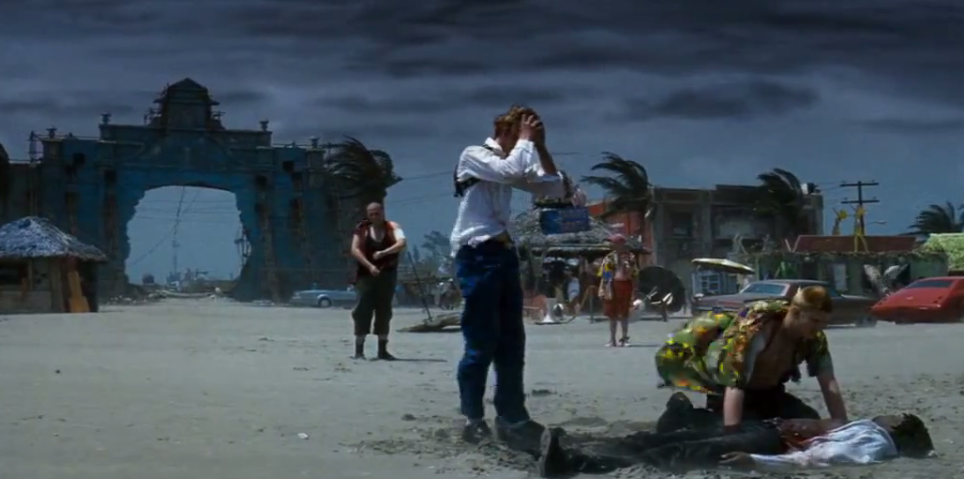
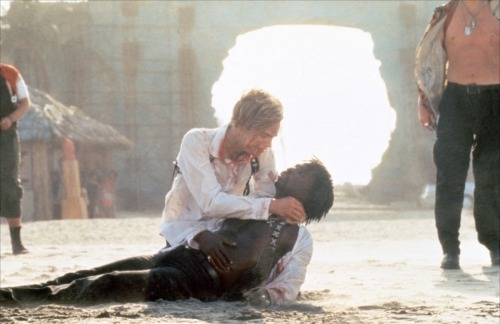
The performances have a new look to me now and I can see things I never would have noticed in my youth. Luhrmann keeps Shakespeare’s language but lets the actors infuse it with modern emotional energy. DiCaprio’s voice trembles with longing, then cracks with anger; Danes builds from timid to defiant without losing believability. Perrineau’s Mercutio is all big, swinging gestures and mercurial tone shifts, while Leguizamo turns Tybalt’s lines into a kind of ritualized threat.
Physical expression is heightened, the fights are dance-like with exaggerated movement is exaggerated, and even during moments of silence the energy is still charged. The theatrical style exposes how every emotion and conflict is “performed” by both the youth and the adults of this world.
Changed Perspective:
As a young teenager who had a major crush on Leo DiCaprio, I remember seeing only rebellion and romance in the chaos; now, I see how much the film is about systems—about the ways kids absorb adults’ rules about love, violence, and gender, then pay the price for their parents’ pride and failure to listen. In the end, returning to Romeo + Juliet as an adult reveals the complex relationships and ironies that escaped me in youth. Its vision of doomed love caught in social machinery is something I can now understand in a new light.
So to summarize the take home points!
Main characters and actors
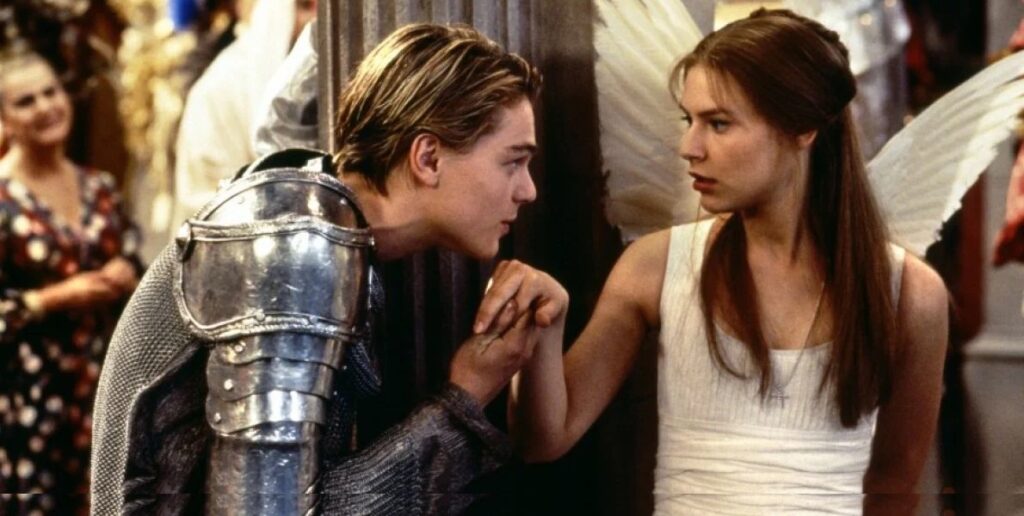
- Romeo: Leonardo DiCaprio plays Romeo as an intense, emotional teenager who falls fast and hard for Juliet and acts on impulse.
- Juliet: Claire Danes plays Juliet, bringing a mix of innocence and muted strength as she pushes back against her family and follows her feelings.
- Tybalt: John Leguizamo makes Tybalt a flashy, dangerous hothead.
- Mercutio: Harold Perrineau plays Mercutio as wild, theatrical, and unpredictable, bursting with energy.
- Father Laurence: Pete Postlethwaite’s Father Laurence feels like a sincere adult trying to calm the chaos and fix things through secret plans.
Basic story beats
- The film is set in a modern city called Verona Beach, where the Montague and Capulet families are rich, violent rivals.
- Romeo and Juliet meet at a Capulet party, fall instantly in love, and secretly marry with Father Laurence’s help, hoping to unite their feuding families.
- Tybalt kills Mercutio in a street fight, Romeo kills Tybalt in revenge, and the police banish Romeo from the city.
- Juliet is ordered to marry Paris, so she fakes her death with a potion from Father Laurence, but the message never reaches Romeo.
- Believing Juliet is truly dead, Romeo poisons himself; Juliet wakes, finds him dead, and kills herself, finally shocking the families into peace.

Character Motives
- Romeo wants intense, “true” love and escape from gang life of the Montagues, and its consequences.
- Juliet wants control over her own life and marriage, not to be treated as an object to be traded in a business-styled match with Paris.
- Tybalt wants to defend Capulet honor at all costs.
- Mercutio wants excitement, jokes, and loyalty to his friends.
- Father Laurence wants to use Romeo and Juliet’s love to end the feud.
Obstacles
- The family feud means Romeo and Juliet can’t openly be together or ask for help without causing more violence.
- The aggressive street culture of guns, gangs, and macho pride turns any argument into a fight.
- Adult authority figures—parents, the police chief, and even the priest—try to control the teens instead of really listening to them.
- Miscommunication and timing – lost messages, people arriving too late – keep blocking the one plan that could have saved them.

Voice choices
- Most of the actors speak Shakespeare’s language in a natural, emotional way, mixing it with modern pacing and slangy energy.
- DiCaprio’s voice often sounds soft and vulnerable, especially in love scenes and when he is desperate or crying.
- Danes’ delivery becomes stronger as Juliet gets more determined, especially in scenes where she defies her parents.
- Perrineau as Mercutio uses big shifts in tone—joking, shouting, then suddenly serious.
- Postlethwaite’s Father Laurence speaks more clearly and calmly, very grounded in this chaotic world.
Physicality
- Romeo’s body language is loose and restless at first, then more desperate and broken as the story turns tragic.
- Juliet moves from shy and contained at home to more open and physically bold when she’s with Romeo, especially in the balcony and bedroom scenes.
- Tybalt’s movement is sharp and stylized—slow walks, sudden attacks, and showy gun handling, like a modern gunslinger.
- Mercutio’s physicality is big and flamboyant
- The whole film leans into exaggerated physical staging—fights in gas stations, chases through city streets—to turn the emotions into big visual moments.


